Why Take Notes During MCCQE Question Practice?

Many candidates study a lot for the MCCQE exam. They read, highlight and re-read. Yet on exam day, they still feel like the facts have slipped through their fingers. But the problem usually isn’t that you are not studying enough.
The problem is often that your review strategy does not match how the brain actually learns. And recalls information under pressure. The MCCQE tests a broad range of high-yield topics. That means you do not need to know everything in the same depth.
You need to recognize patterns quickly. Remember core concepts clearly and apply them under time pressure. That requires a smarter approach. In this post, you will learn why taking notes during question practice can make your review more focused and effective. You will also discuss how the new note-taking feature in Ace QBank can help you capture key clinical pearls.
Why Should You Take Notes During MCCQE Question Practice?
Note-taking is a deliberate process. It is the process of converting high-yield medical information into concise, organized and reviewable study material.
It involves identifying core concepts, diagnostic clues, Key points, contraindications and common exam traps from lectures, textbooks and question banks. I should add that it is very helpful when studying for any medical licensing exam.
However, it works best as a tool for processing and reviewing material. It should emphasize understanding and connections rather than copying material. When it comes to MCCQE1 exam preparation.
The goal is to create a reliable and personalized resource. A resource that helps you rapidly review, retain and apply medical knowledge to clinical vignettes.
In that sense, the most effective approach is to use note-taking strategically. Rather than excessively. Well-organized notes can help you clarify difficult concepts. Identify patterns and create a useful reference for later review.
You all know that the real gains in the MCCQE exam preparation. Come from regularly answering questions, recalling information without prompts and revisiting weak areas over time. And notes should remain secondary to active learning methods.
When used this way. Notes become a practical support tool that reinforces understanding. Instead of a task that simply gives the illusion of productivity.
The Key Benefits of Note Taking for the MCCQE Exam

For many candidates preparing for the MCCQE Part 1 exam. It can feel like an exercise in managing volume. The sheer breadth of material. Can leave even diligent candidates unsure where to focus.
But well-crafted notes can help turn that volume into something more targeted and efficient. Here are the three main benefits of taking proper notes during the MCCQE exam preparation:
- Active learning
- High-yield pattern recognition
- Retrieval practice + faster review + reduced stress
Active learning is one of the biggest advantages of taking proper notes during MCCQE exam preparation. When you write a topic in your own words. You are forcing yourself to think through the clinical problem. You begin asking the same questions an exam stem expects you to answer:
- What is the most likely diagnosis?
- Which findings matter most?
- What should be done first?
- What red flags change the plan?
- What should be avoided?
This process moves your learning from passive recognition to active clinical decision-making.
Good notes also help you build high-yield pattern recognition. Most medical licensing exams across the world test safe first steps, common presentations, clinical priorities and prevention.
Another major benefit is retrieval practice, faster review and reduced stress. The strongest notes are often written as questions rather than plain statements. Because they make you actively recall the answer.
When you answer a question wrong due to a knowledge gap. You often create a short note to remind you of the forgotten medical concept. Later whenever you return to the note. It helps you recall the key points and concepts in a concise way.
And in the long run. This method does more than merely embed those once-forgotten concepts into your memory. It becomes a quiet but powerful antidote to stress, gradually shoring up your confidence with every review.
Over time, what began as scattered notes. Matures into a disciplined and personalized revision system. One that is high-yield and targeted. Rather than an unwieldy collection of endless summaries.
As the exam gets closer, these short notes become a rapid-review tool. Help you rapidly go through the material without rereading entire question blocks.
You end up with a focused set of prompts, warnings and clinical triggers that are easy to revisit. This makes last-minute review far more efficient and helps you retain the most testable information.
On the other hand, taking notes while using a question bank does far more than simply reinforce rote memorization.
It transforms the act of studying into a dynamic and rigorous process. One where repeated exposure to questions becomes not just a matter of routine but a pathway to mastery.
Each time you encounter a question. Whether you answer it correctly, stumble or hover close to selecting the correct answer. You are compelled to confront your own understanding. You must reckon with your errors, dissect your logic and piece together fragments of knowledge into a coherent whole.
This deliberate, sometimes uncomfortable engagement with your mistakes. It is precisely what forges knowledge that endures beyond the short-term. It is no longer about passive familiarity.
Instead, it becomes about active recall and retrieval. The very skills demanded by high-stakes exams such as the MCCQE1 exam.
This, then, is the crux of our discussion in this post. In the sections that follow, we will dig deeper into why this approach. Note-taking paired with intelligent question practice is so essential.
We will explore how it reshapes the way we remember and understand information. How it turns fleeting encounters with facts into lasting expertise. And why it might just be the difference between superficial learning and true readiness.
What Is the New Note-Taking Feature in Ace QBank?
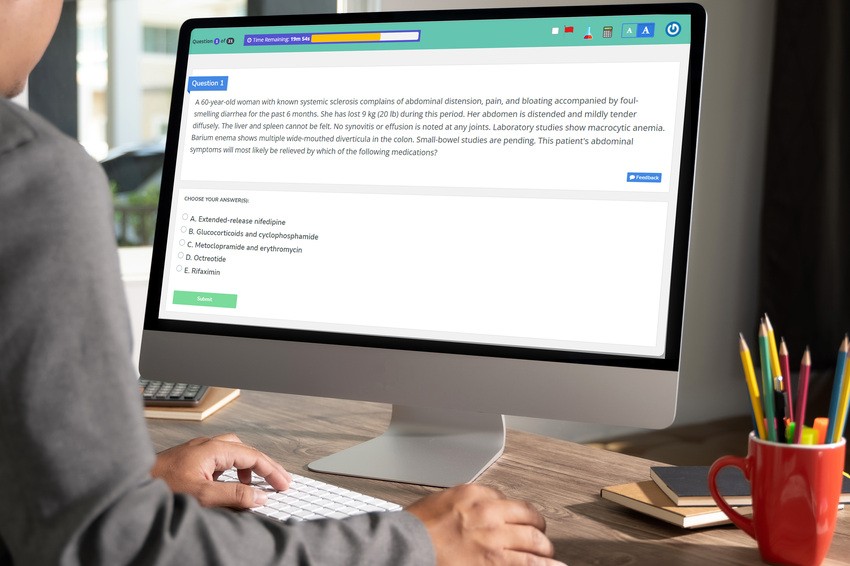
The new note-taking feature in the question bank. It is a built-in digital notebook designed to help candidates capture, organize and revisit important learning points. While working through practice questions.
Instead of keeping notes in scattered places such as paper notebooks or separate documents. You can now save key takeaways directly within the QBank. This creates one organized space for the concepts, explanations and mistakes you want to review later.
For medical graduates preparing for the exam. This matters because a familiar challenge often appears during question practice.
You answer a question incorrectly, read the explanation and feel that you understand the concept. But once the next question loads. That new knowledge can quickly begin to fade. A few hours later, the detail may be difficult to recall.
The Qbank note-taking feature is designed to reduce that loss. When you come across an unfamiliar topic, a useful explanation or a question you missed. You can pause and write a short note in your own words. This helps turn a brief moment of understanding into something easier to remember and review.
This approach is supported by evidence from learning science. Obviously, active recall or the practice of retrieving information from memory is effective. However, writing concise notes in your own words. Helps you process the concept more deeply. Rather than passively moving through questions.
The feature is especially useful for the MCCQE Part 1 exam prep. Because it gathers all your notes from across the question bank in one convenient location. That means less time searching through different files or notebooks. And more time reviewing the material that matters most.
Also, having all the notes in one location helps you focus on deliberate review. One of the most effective ways to strengthen exam readiness.
In simple terms, the new note-taking feature in Ace QBank helps you:
- Save key learning points while practising questions
- Record mistakes and difficult concepts for later review
- Write explanations in your own words to improve understanding
- Keep all your notes in one organized place
- Use active recall to strengthen long-term memory
- Revise more efficiently before the exam
At first glance, this new feature may seem like a small addition. But for candidates preparing through hundreds or thousands of practice questions. Having one reliable place to collect and revisit important takeaways. It can make study sessions more focused, efficient and meaningful.
How to Use Ace QBank Notes to Study Smarter for the MCCQE?

To extract the true value from the Qbank’s note-taking feature. One must approach it with intention and discipline. A strategy forged in the crucible of active revision.
The process demands more than simply recording facts. It is about cultivating understanding underpinned by rigour, reflection and honesty.
Begin by capturing notes the moment you encounter an important medical concept. Do not wait. In my years of experience. I have learned that immediacy sharpens clarity. When a concept is still vivid. Distilled from the press of new information and seize it. Because this is the moment. When your mind is most attuned to nuance.
You should resist the temptation to chronicle every detail in your note. Instead pare your notes down to their essence and ask yourself:
- What is the heart of this lesson?
- What is the indispensable kernel of knowledge I must carry forward?
Conciseness is not mere economy. It is discipline. A filter that privileges the main idea over peripheral noise.
Write in your own words. Paraphrase with candour and simplicity. And transform complex ideas into language that resonates with you personally. It is here, in this act of rephrasing. That genuine comprehension is forged. If you cannot articulate a concept plainly. Return to it until you can.
Interrogate your mistakes with the curiosity of an investigator. When you stumble probe for the underlying cause. Did you misinterpret the question? Was there a gap in your knowledge? Or did two similar conditions blur together in your mind?
Each mistake holds a lesson. Each misstep is a chance to illuminate the shadows in your understanding.
Revisit your notes with regularity and intention. The mind grows stronger through repeated engagement like any muscle. Not through frantic and last-minute effort. But through deliberate and sustained review.
Short and consistent sessions carve deep channels in memory where knowledge can take root.
Last but not least, challenge yourself. Do not settle for passively rereading your notes. Transform your notes into questions. And attempt to answer them without peeking. This self-testing sharpens recall. And prepares you for the swift judgment required on exam day.
Other Features of Ace QBank for MCCQE Exam Preparation

The exam tests your clinical knowledge, your resilience and your strategic thinking. At this point, the question is not whether you can conquer it or not. But how you study for the exam efficiently.
This is where a high-quality question bank becomes the most critical tool in your arsenal.
When we talk about the best. We are not just looking for a digital pile of questions. We are looking for a dynamic, intelligent system designed to turn your effort into results.
That’s why so many graduates point to Ace QBank as the gold standard for MCCQE1 exam preparation. With a foundation of over 2950 high-yield questions, this isn’t just a question bank.
It is a comprehensive training ecosystem that’s continuously refined to keep you ahead of the curve. Let me break down how it can revolutionize your prep and skyrocket your MCCQE1 results.
Tailor Your Practice Session with Surgical Precision
First and foremost. Let’s talk about strategic revision. Your strengths and weaknesses are unique. So generic and one-size-fits-all study plans are inefficient.
The Qbank allows you to build Customizable Practice Tests. Giving you the power to focus on the 21 categories available in the dashboard.
Are you finding cardiology or ethics challenging? You can create question blocks that specifically target those areas. Turning your weak points into areas of confidence.
This targeted approach is proven to be effective. This focused practice can boost knowledge retention by up to 30%. You have got to work smarter not harder.
Master Both Speed and Objectives with Two Study Modes
The exam is a test of both knowledge and endurance. To pass one needs to be accurate and answer questions efficiently. This is why having multiple study modes is a game-changer. The Qbank offers two essential modes:
- Time Study Mode
- Tutor Study Mode
Time Study Mode is a timed mode that replicates the pressure of the real exam. Helping you perfect your pacing and time management.
I always recommend starting with categories you are comfortable with in this study mode. Then you can’t blame unfamiliarity with the topics. Reason for being slow and unable to finish the question block on time.
This study mode helps you build a steady pace and master your timing. This is crucial for staying composed on exam day.
Tutor Mode provides immediate, detailed feedback after every question. It is like having a personal tutor. Guiding you through complex topics. Ensuring you understand the “why” behind every answer.
That’s why I always recommend starting with difficult categories. It study mode will help you easily cover the objectives associated with these categories. At the same time, build your confidence one question at a time.
However, strategically alternating between these study modes. It will help you develop the speed needed for the exam. All without sacrificing the deep understanding of the medical concepts.
Turn Your Mistakes into Your Greatest Strengths
In medicine, you either know the medical concept or you don’t. And questions are answered incorrectly for a reason. But how you handle incorrect answers will define your success.
The Progress Tracking & Analytics feature is your personal performance dashboard. After every test block, you receive detailed feedback. Including the time spent on each question.
Don’t just glance at the explanations for the questions you got wrong; dissect them. Was it a knowledge gap? Did you misinterpret the question?
This reflective practice is incredibly powerful. In fact, those who thoroughly analyze their errors after a practice can see their scores improve by as much as 25%.
On the other hand, the Redemption Mode allows you to create custom test blocks exclusively from your previously incorrect answers.
This intelligently curated practice ensures you are constantly reinforcing your weakest areas. You will learn the concepts by revisiting these questions on a spaced schedule. And the frustrating “I’ve seen this before” feeling will fade. It will be replaced by steady confidence.
Enhance Retention with Powerful Visual Tools
Let’s be honest, you need a robust recall of the key points. The faster you recall, the better your time management will be on exam day. To make learning stick and boost the recall of key points.
The Qbank embeds over 100 algorithms, summary tables. and custom illustrations directly into its explanations. All aligned with the latest Canadian guidelines.
These visuals simplify complex topics into memorable and easy to remember pieces. Reducing cognitive load and helping you access critical information instantly under pressure. It sounds like a score booster all day long to me.
Accurately Gauge Your Readiness with Mock Exams
It is essential to have a reliable way to measure your progress. The Qbank offers two distinct Self-Assessments with questions that are kept separate from the main question pool.
This is deliberately done to ensure an accurate and unbiased snapshot of your readiness. However, the score itself is not the final verdict. Its true value lies in the post-test analysis.
Use the results to identify any remaining gaps in your knowledge or timing issues. And let those insights guide your study plan for the final weeks. When paired with an actionable follow-up. These assessments are a strong predictor of exam success.
How to Get Started with Ace QBank?

The easiest way to get started with the Qbank is to begin where there is no risk at all. A free demo and some simple, hands on exploration.
However, you need to sign up for the free demo. The sign up process is straightforward. You register for a complimentary demo account on the platform.
In return, you gain access to 21 sample questions. Enough to give a useful snapshot of the content without overwhelming you. It also gives you an authentic sense of the interface. The question style and the key features before you make any commitment.
What to test during the demo?
During that trial run, there are a few practical tools worth putting through their paces. You can flag questions for later review. A small but significant function that allows you to track areas of uncertainty or topics you want to revisit.
You can also highlight key information in the question stems and in the explanations. Mimicking the way many candidates already mark up textbooks and notes.
Just as important are the different study modes. You can switch between timed mode, which simulates exam conditions. And tutor mode, which allows you to slow down and focus on learning from each question.
There is also the option to experiment with building personalized question blocks. Tailor shorter or longer sessions to your schedule and concentration.
The objective of this exercise is simple but critical. To determine whether this platform aligns with your study habits and offers the structure you need.
In an exam year already marked by change and pressure. The degree to which you and the Qbank are well-matched can truly make a huge difference.
Key Takeaways
Taking notes during MCCQE question practice makes studying more active. But the best notes are short and easy to understand. So write notes in your own words rather than copying directly from the material. This forces your brain to process the information more deeply.
Revising notes helps you spot high-yield patterns faster. This is very helpful in building robust retention. But you need to quiz yourself while reviewing to improve memory through retrieval practice.
Ace QBank is presented as a strong Qbank for MCCQE exam preparation. It offers MCC-aligned questions, current content and evidence-based medicine explanations that help you understand why an answer is correct. Use your Qbank tracking performance to help you identify the topics that need the most attention.