When AI Answers Conflict with Guidelines in MCCQE

There can be no doubt. Artificial intelligence now courses through the very veins of modern existence. From the hospital wards and classrooms to our crossroads and cinema screens. AI is not merely knocking at the door. It has already taken its place at the table.
However, when it comes to medicine. AI must be used carefully and responsibly. It can help doctors analyze medical images and identify patterns in patient data. But when studying for the MCCQE exam. AI should not replace trusted Canadian medical resources.
In this post, we will look at what you need to prepare for the MCCQE in 2026. Why AI-generated answers can conflict with Canadian clinical guidelines. And the risks of relying on AI for the Canadian medical licensing exam. We will also share what to look for in a reliable MCCQE study resource.
What Do You Need to Prepare for MCCQE in 2026?
When you know that the exam is designed to assess a candidate’s proficiency. Proficiency in diagnosing common medical conditions, along with proper management and accurate treatment. This places a strong emphasis on strict adherence to Canadian clinical practice guidelines.
Success on this high-stakes examination necessitates a deep understanding of medical principles. This is best cultivated through authoritative and evidence-based medicine resources.
While AI has emerged as a powerful technological tool in many domains. Its application as a primary or even supplementary study source for the MCCQE. Presents significant risks that fundamentally outweigh its potential benefits.
The core of the MCCQE assessment lies in the precise application of knowledge to complex clinical scenarios. Candidates are expected to demonstrate an ability to arrive at accurate diagnoses. Select appropriate management strategies and prescribe correct treatments.
All strictly within the context of established Canadian guidelines. These guidelines reflect the latest research. And they are fundamental to safe and effective patient care.
Relying on AI may not consistently or accurately reflect these specific and evolving standards. This can lead to the internalization of outdated or demonstrably inaccurate information. This directly conflicts with the examination’s mandate to evaluate adherence to recognized national standards.
AI models, while highly sophisticated. Operate on vast, generalized global datasets that inherently contain inconsistencies, biases and regional variations in practice.
AI-generated content can inadvertently conflate different international guidelines (such as mixing American and Canadian protocols). Present information without the necessary clinical nuance or even hallucinate details entirely.
The risk of AI producing plausible sounding but incorrect answers. Especially in areas where guidelines are complex or rapidly evolving is a critical concern for medical candidates.
When an AI answer conflicts with actual Canadian medical guidelines. It introduces dangerous knowledge gaps. A candidate might memorize an AI-generated algorithm. Only to find that it violates the specific protocols tested on the MCCQE. Costing them crucial points and compromising their clinical reasoning.
To build the competence required for the exam. You must instead turn to the foundational pillars of medical education. Authoritative medical textbooks and peer-reviewed literature.
Such resources should serve as the bedrock of the MCCQE exam preparation. Because these are meticulously fact checked by leading experts in their respective fields. They provide comprehensive explanations. Detailed pathophysiological mechanisms and robust clinical correlations. Fostering the deep conceptual understanding essential for complex clinical reasoning.
Furthermore, a dedicated question bank. One developed and validated over years of use and refinement. Is a vital component of successful study strategies. Such a question bank not only tests knowledge but also provides evidence-based explanations.
Explanations that clarify the underlying rationale. Highlight critical decision-making points, explicitly cite the primary sources and current Canadian guidelines that inform the correct answers.
Because of this rigour, this carefully crafted question bank will remain a gold standard for learning. I will introduce the question bank in another section later.
Overall, preparing for the MCCQE is an exercise in mastering clinical precision and not general approximations. Therefore, the best approach is to use verified and reliable resources. To properly prepare for the exam.
Do I need AI to study for the exam?

Not necessarily. The MCCQE is clinically oriented. It is a national medical examination designed to assess medical knowledge and clinical decision-making. It thoroughly evaluates the clinical judgment expected of a medical graduate at the level of a Canadian physician.
For both Canadian and international medical graduates (IMG). Passing the exam is a requirement for applying to Canadian residency programs. And it forms part of the pathway toward the Licentiate of the Medical Council of Canada.
That is the central point. The Medical Council of Canada is not asking whether a candidate used artificial intelligence. It is asking whether the candidate can reason safely through clinical problems.
And that distinction matters.
Because it highlights that a candidate must understand how Canadian guidelines shape care. How diagnostic criteria are applied. And how management decisions unfold in a real clinical setting.
It is one thing to recognize a disease from a textbook description. It is another to know what to do first. What to rule out. What not to miss and how to guide the next step.
AI can’t help with that process. Unless it is programmed and used carefully. Therefore, it should not become the source of authority. Medical exams reward precision that comes from understanding.
On the other hand, AI platforms can still produce answers that sound confident. While being incomplete or simply wrong. This is the last thing that any candidate wants before taking the exam.
So the answer is measured. You do not need AI to study for the MCCQE. Many candidates have passed without it. Using nothing but trusted question banks, Canadian clinical guidelines and textbooks.
That said, if you choose to use AI. Use it as an assistant. And certainly not as a substitute for reliable medical sources.
The burden remains where it has always been, on the candidate. The exam tests your clinical reasoning, medical knowledge and ability to make safe decisions. AI may help you study. It cannot sit the exam for you.
3 Reasons Why You Should Not Use AI for MCCQE

When you sit in that exam room. You face the culmination of years. Years that tested your endurance, your discipline and sometimes even your faith in yourself.
The exam isn’t just another checkpoint. It is a summit where only the strong-willed and steadfast find their footing.
In this era of technological revolution. It is all too tempting to turn to artificial intelligence as a digital oracle. Promising quick answers and instant reassurance. But let us step back.
Because your path as a Canadian physician will demand sharp clinical judgment. You must not abdicate your responsibility to a machine that cannot walk the wards. See the nuance on a patient’s face or understand the quiet dignity of a patient’s suffering.
Draw instead from the deep well of Canadian excellence in medicine. Our gold-standard textbooks. Respected clinical guidelines and trusted question bank.
From coast to coast, colleagues build each other up through honest debate, critical reflection and accountability. This is how medicine thrives by grounding itself in our shared reality and our uniquely Canadian context.
When I talk with physicians on the front lines. Whether battling the opioid crisis in Vancouver. Or working in the remote clinics of Nunavut. I see that readiness does not bloom from shortcuts.
It grows from the courage to trust your own mind. To learn from your missteps and to refine your reasoning with each case and each shift.
The MCCQE will probe your critical thinking and your problem solving. So, do not use AI as your primary teacher or clinical authority for the MCCQE. Here are 3 more reasons to help you decide better:

- AI Can Produce Confident but Inaccurate Clinical Information
- AI Can Undermine the Clinical Reasoning Skills Assessed by the MCCQE
- AI May Not Align with Canadian Standards or Health-System Priorities
- AI Can Produce Confident but Inaccurate Clinical Information
AI generated responses may appear credible. It because they often use clear medical language, structured reasoning and references to common clinical principles. However, fluency does not guarantee accuracy.
AI can generate incorrect facts, misinterpret clinical details or cite outdated guidance. It may also fail to recognize uncertainty when evidence is limited. Or when a clinical scenario requires additional patient-specific information.
- How would you know?
- How can you tell if this has happened?
You see, these are questions that cut right to the heart of the concern. This risk matters greatly for MCCQE preparation. The examination assesses knowledge of safe and evidence-informed clinical care. An inaccurate recommendation about diagnosis, screening, or treatment may lead to an incorrect exam answer.
For example, AI may confuse first-line and second-line therapies. Recommend an inappropriate screening interval or overlook an urgent “red flag” that requires immediate escalation of care.
From an academic perspective. You should not accept AI output as an authoritative source. You should verify information using current and credible Canadian resources. Such as Canadian clinical practice guidelines and established medical textbooks. To properly cover the Medical Council of Canada objectives.
- AI Can Undermine the Clinical Reasoning Skills Assessed by the MCCQE
The exam evaluates more than factual recall. It examines clinical reasoning. The ability to interpret a presentation, identify urgent problems and generate a relevant differential diagnosis. Along with determining the safest next step in management.
Overreliance on AI can weaken these skills. That’s because AI provides rapid answers and explanations before the learner has worked through the case independently. This may create an “illusion of understanding.”
Every single clinical case you read. You may see later in your practice. The reason is you are practicing medicine in a multicultural contrary. You will see people with different backgrounds.
Therefore, effective preparation requires active learning. You need to struggle with uncertainty. Make an initial decision, identify why your answer was incorrect and revise your reasoning.
These steps strengthen diagnostic thinking and clinical problem solving. If AI routinely completes these steps for you. You may become less able to perform independently during the MCCQE or in clinical practice.
A safer academic approach involves answering questions independently first. Then using validated resources to review the rationale. AI should never replace deliberate practice, supervised feedback and reflective learning.
- AI May Not Align with Canadian Standards or Health-System Priorities
AI systems often draw on medical information from multiple countries and time periods. They usually do not have access to paid versions.
As a result, an answer may reflect American, British or other international practices. Rather than the Canadian context assessed by the MCCQE.
Although clinical evidence often overlaps across jurisdictions. Important differences exist in guidelines and screening recommendations.
The exam expects you to apply care principles that fit Canadian practice. This includes knowledge of:
- Canadian preventive care and screening recommendations
- Canadian ethical and legal responsibilities, including child protection and medical assistance in dying
- Equitable care for Indigenous Peoples and other underserved communities
- Publicly funded health services and barriers to access
AI may also rely on information that no longer reflects current Canadian guidance. Therefore, you should confirm all exam-relevant information through primary Canadian sources.
Ace QBank Is the Best Resource for MCCQE Exam Preparation
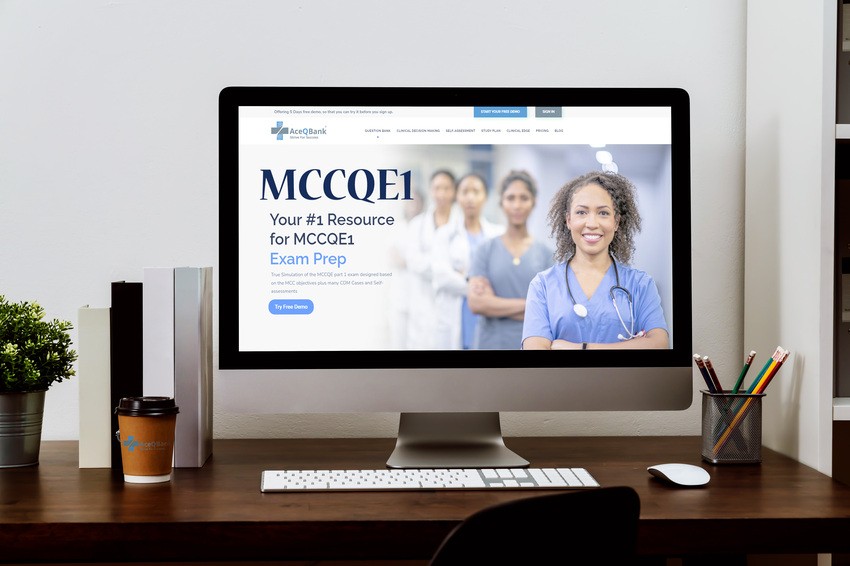
Succeeding on this exam demands far more than clinical acumen. It is as much a test of your composure and critical decision-making as it is of your medical knowledge.
The pivotal question at this stage isn’t whether you will overcome the challenge. But rather, how you will make every moment of preparation count.
That’s precisely why a robust question bank stands as your most valuable ally. When conversations turn to the best. We are not referring to a static list of questions. What is needed is a sophisticated and adaptive platform. A resource engineered to transform hard work into meaningful results.
It is for this reason that an overwhelming number of recent graduates point to Ace QBank as the benchmark. The undisputed gold standard for MCCQE exam preparation. Backed by a bank of more than 2,950 high-yield questions. This QBank isn’t just another prep tool.
Think of it as a comprehensive training environment. one that is meticulously updated to ensure you are always a step ahead. Let’s take a closer look at how this tool can fundamentally change the way you prepare. And, ultimately, elevate your score.
Every single question comes complete with a detailed explanation. Most question banks simply offer a brief rationale. Sometimes limited to the correct answer. But Ace QBank goes further, providing in-depth, evidence-based explanations for both right and wrong options.
It is a significant advantage. Because it helps you fully grasp and efficiently address the wide range of objectives outlined by the Medical Council of Canada.
And truly, that is just the beginning. The explanations are embedded with powerful features. Some are designed to boost your retention of the most important points. Others are geared to sharpen your time management. There is even targeted support for those challenging areas where you need it most.
Ahead, I will walk you through a few of these distinctive features. Show you how they can make a real difference in your preparation. And why Ace QBank is the best resource for your MCCQE exam preparation.
Features of Ace QBank for MCCQE Exam Preparation
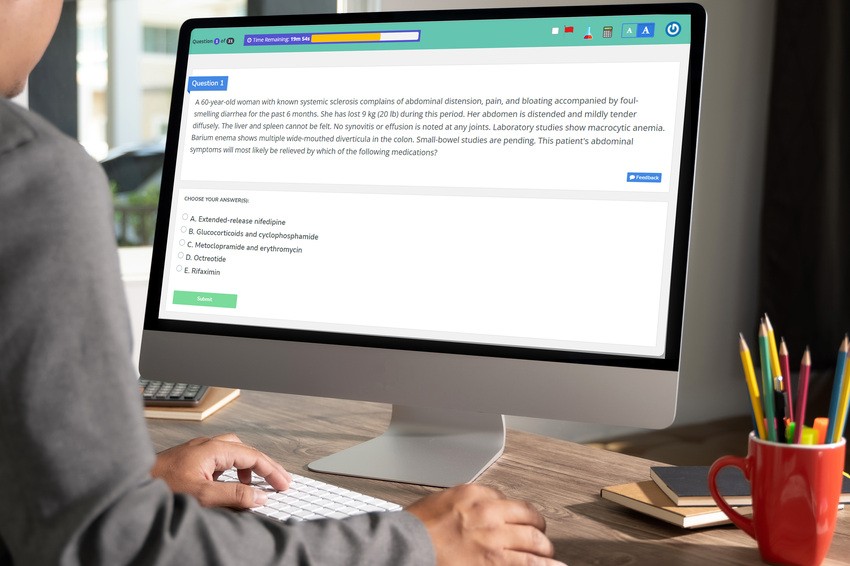
A question bank, when built properly, does more than present a candidate with questions. It becomes a framework for identifying weaknesses. It reinforces key concepts and helps you learn how to think through clinical problems under exam conditions.
Ace QBank has been developed with that purpose in mind. It includes several features intended to support you as you prepare for the MCCQE. Some of those features have been added or refined in response to user feedback.
That is an important point. The needs of medical graduates evolve as they move through their study period. And a useful platform must be able to adapt to those needs while remaining focused on the essential goal. Helping candidates understand medicine clearly and apply it accurately.
This section will not attempt to examine every feature in detail. That would take us beyond the scope of this discussion. Instead, it is worth focusing on a few selected features here.
Tailor Your Practice Session with Surgical Precision
First and foremost. Let’s talk about strategic revision. Your strengths and weaknesses are unique. So generic and one-size-fits-all study plans are inefficient.
The Qbank allows you to build Customizable Practice Tests. Giving you the power to focus on the 21 categories available in the dashboard.
Are you finding cardiology or ethics challenging? You can create question blocks that specifically target those areas. Turning your weak points into areas of confidence.
This targeted approach is proven to be effective. This focused practice can boost knowledge retention by up to 30%. You have got to work smarter not harder.
Master Both Speed and Objectives with Two Study Modes
The exam is a test of both knowledge and endurance. To pass one needs to be accurate and answer questions efficiently. This is why having multiple study modes is a game-changer. The Qbank offers two essential modes:
- Time Study Mode
- Tutor Study Mode
Time Study Mode is a timed mode that replicates the pressure of the real exam. Helping you perfect your pacing and time management.
I always recommend starting with categories you are comfortable with in this study mode. Then you can’t blame unfamiliarity with the topics. Reason for being slow and unable to finish the question block on time.
This study mode helps you build a steady pace and master your timing. This is crucial for staying composed on exam day.
Tutor Mode provides immediate, detailed feedback after every question. It is like having a personal tutor. Guiding you through complex topics. Ensuring you understand the “why” behind every answer.
That’s why I always recommend starting with difficult categories. It study mode will help you easily cover the objectives associated with these categories. At the same time, build your confidence one question at a time.
However, strategically alternating between these study modes. It will help you develop the speed needed for the exam. All without sacrificing the deep understanding of the medical concepts.
Turn Your Mistakes into Your Greatest Strengths
In medicine, you either know the medical concept or you don’t. And questions are answered incorrectly for a reason. But how you handle incorrect answers will define your success.
The Progress Tracking & Analytics feature is your personal performance dashboard. After every test block, you receive detailed feedback. Including the time spent on each question.
Don’t just glance at the explanations for the questions you got wrong; dissect them. Was it a knowledge gap? Did you misinterpret the question?
This reflective practice is incredibly powerful. In fact, those who thoroughly analyze their errors after a practice can see their scores improve by as much as 25%.
On the other hand, the Redemption Mode allows you to create custom test blocks exclusively from your previously incorrect answers.
This intelligently curated practice ensures you are constantly reinforcing your weakest areas. You will learn the concepts by revisiting these questions on a spaced schedule. And the frustrating “I’ve seen this before” feeling will fade. It will be replaced by steady confidence.
Enhance Retention with Powerful Visual Tools
Let’s be honest, you need a robust recall of the key points. The faster you recall, the better your time management will be on exam day. To make learning stick and boost the recall of key points.
The Qbank embeds over 100 algorithms, summary tables. and custom illustrations directly into its explanations. All aligned with the latest Canadian guidelines.
These visuals simplify complex topics into memorable and easy to remember pieces. Reducing cognitive load and helping you access critical information instantly under pressure. It sounds like a score booster all day long to me.
Accurately Gauge Your Readiness with Mock Exams
It is essential to have a reliable way to measure your progress. The Qbank offers two distinct Self-Assessments with questions that are kept separate from the main question pool.
This is deliberately done to ensure an accurate and unbiased snapshot of your readiness. However, the score itself is not the final verdict. Its true value lies in the post-test analysis.
Use the results to identify any remaining gaps in your knowledge or timing issues. And let those insights guide your study plan for the final weeks. When paired with an actionable follow-up. These assessments are a strong predictor of exam success.
How to Get Started with Ace QBank?

The easiest way to get started with the Qbank is to begin where there is no risk at all. A free demo and some simple, hands on exploration.
However, you need to sign up for the free demo. The sign up process is straightforward. You register for a complimentary demo account on the platform.
In return, you gain access to 21 sample questions. Enough to give a useful snapshot of the content without overwhelming you. It also gives you an authentic sense of the interface. The question style and the key features before you make any commitment.
What to test during the demo?
During that trial run, there are a few practical tools worth putting through their paces. You can flag questions for later review. A small but significant function that allows you to track areas of uncertainty or topics you want to revisit.
You can also highlight key information in the question stems and in the explanations. Mimicking the way many candidates already mark up textbooks and notes.
Just as important are the different study modes. You can switch between timed mode, which simulates exam conditions. And tutor mode, which allows you to slow down and focus on learning from each question.
There is also the option to experiment with building personalized question blocks. Tailor shorter or longer sessions to your schedule and concentration.
The objective of this exercise is simple but critical. To determine whether this platform aligns with your study habits and offers the structure you need.
In an exam year already marked by change and pressure. The degree to which you and the Qbank are well-matched can truly make a huge difference.
Key Takeaways
Use trusted Canadian medical resources as your primary MCCQE study sources. AI generated answers can sometimes be inaccurate. They may also be based on guidelines that do not apply to Canada. You should always verify any clinical information against current Canadian guidelines.
Do not let AI replace independent clinical reasoning. The MCCQE assesses diagnostic thinking, prioritization and safe management decisions. Answer practice questions independently first. Then use reliable explanations to identify and correct knowledge gaps.
A focused Canadian question bank can support effective preparation. Resources such as Ace QBank help candidates practise high-yield clinical scenarios. It provides evidence-based medicine explanations, tracks weaknesses and assesses readiness through mock exams.