How to Monitor MCCQE1 Exam Preparation Progress?

One cannot overstate the importance of meticulous preparation. When facing the formidable challenge of the MCCQE1 exam.
The sheer breadth of information to be covered is staggering. The terrain is dense with details demanding mastery and attention. Without a disciplined system guiding your efforts. It becomes all too easy to lose your bearings.
In this post, we will explore why progress monitoring matters for MCCQE1. How does monitoring your progress help you stay on track? Also we will discuss practical methods for identifying weaknesses early to adjust your study plan accordingly.
Why Progress Monitoring Matters for MCCQE1?
For many candidates, preparation for the MCCQE Part I begins in a quiet and disciplined manner. A laptop open at the corner of a library table.
A notebook filled with condensed summaries and partially revised differential diagnoses. And the familiar late-evening routine of completing one additional block of questions before leaving for the day.
This work may feel consistent and productive. However, progress in examination preparation cannot be assessed by effort alone. A lengthy study session may create the impression of momentum. Even when important weaknesses remain unaddressed or when the same mistakes recur in slightly different clinical contexts.
According to the Medical Council of Canada, the examination objectives are linked to the attributes expected of medical graduates entering residency in Canada.
Consequently, candidates are assessed not only on their ability to recall essential medical knowledge. But also on the clinical judgment, decision-making and professional reasoning expected within Canadian medical practice.
In practical terms, this means that the exam scope is broad. Your time is limited and stakes are high.
Therefore, you need a clear understanding of where your knowledge is secure. Where it remains vulnerable. And whether your performance remains consistent over time and under pressure.
Because you are preparing for an assessment that requires you to consolidate months of study. Clinical reasoning and test-day discipline into a single examination sitting.
For this reason, progress monitoring is an essential component of effective preparation. When used appropriately, it helps transform preparation. From a general sense of busyness to a more structured and evidence-informed process.
It helps you to identify which content areas are improving, which remain unreliable and whether repeated mistakes are being corrected. It also supports more informed decisions about when to take self-assessment.
However, before sitting the actual examination. Any candidate should have evidence that their performance is stable under conditions that closely resemble the test itself. This clarity is not separate from preparation. Rather, it is an important part of becoming ready.
How to Monitor Your MCCQE1 Exam Preparation Progress?
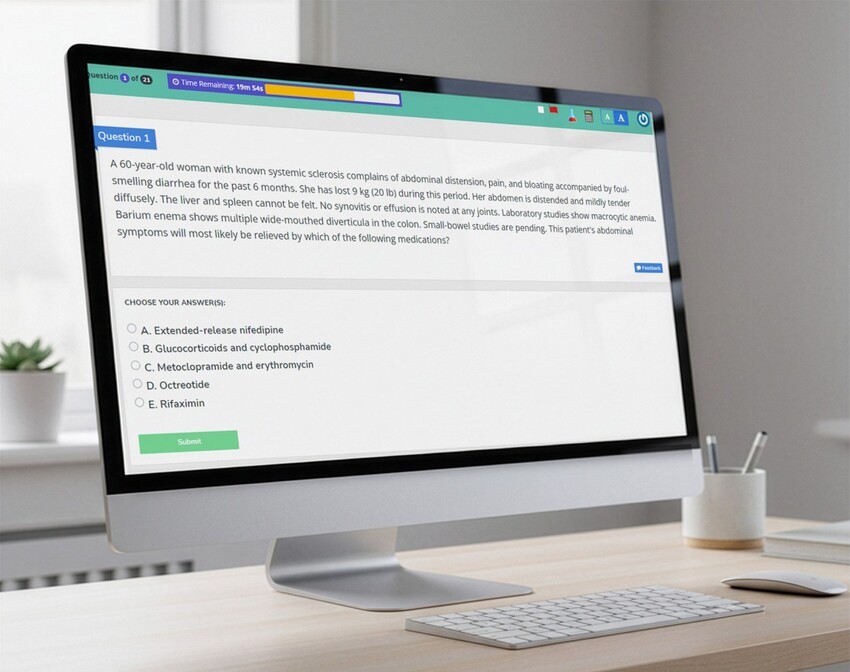
For medical graduates preparing for the MCCQE Part 1 exam. The ability to accurately gauge one’s readiness is a critical operational imperative.
Success on this rigorous assessment requires a strategic approach to monitoring progress. Ensuring that valuable time is allocated precisely where the greatest knowledge gaps exist.
In this highly competitive arena. One tool that has emerged as a distinct asset for candidates is Ace QBank.
To properly understand the architecture of this Question bank. One must first look at its origins. This is a uniquely Canadian resource. Engineered specifically by Canadian physicians with the explicit goal of preparing future Canadian practitioners.
The evolution of the platform has not occurred in a vacuum. Rather it is the result of a continuous and ground-level feedback loop.
The features currently available are the direct consequence of specific requests from Canadian medical students. Combined with the constructive feedback provided by international medical graduates (IMGs) navigating the licensure process.
At the core of this system is a pragmatic approach to performance analysis. In essence, the platform offers three primary features that provide a clear and unvarnished view of your ongoing progress.
These features function less as passive scorekeepers. And more as active navigational aids. Allowing you to review your performance metrics in real-time. You can leverage this data. To adjust and recalibrate your study plans as the examination draws nearer. Focusing intensely on your weakest areas.
From an analytical standpoint. This targeted and data-driven methodology. Stands out as arguably the most effective strategy for managing the pressures of exam preparation.
It removes the guesswork from studying, replacing it with measurable and actionable intelligence.
In the subsequent sections, we will examine precisely how to leverage these three core features to optimize your exam preparation. And ultimately secure the best possible outcome on the MCCQE1.
How To Leverage the Ace Qbank Features to Improve MCCQE1 Results?

There are three main features within the Qbank that help you boost your exam prep. These features come to help sequentially.
Then again, these features are added to further facilitate the MCCQE1 exam preparation. The first feature is Specific Progress Monitoring. The second feature tracks the recovery of weak areas. And the third feature is a bird’s eye view of your overall progress.
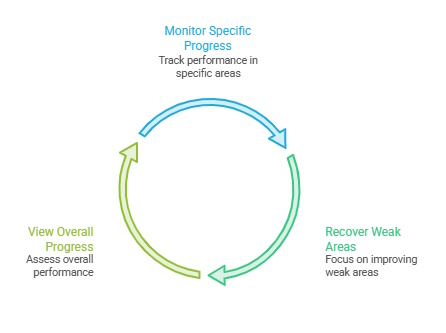
Here is the list of all the features in the correct order:
- Specific Progress Monitoring
- Weak-Area Recovery Tracker
- Overall Progress Monitoring
Specific Progress Monitoring
This is the fresh-performance layer. Here, you are in absolute control of more than 2,950 high-yield questions.
You know which categories are challenging and which ones are easy for you. Choose a category and start creating question blocks for that specific category.
After finishing the question blocks. You will see a percentage indicating how well it was done. Regardless, you are in a time or tutorial study mode. But that is just scratching the surface.
Because when you go through the answer in the explanation section. You will see how much time you spent on each question and how many questions you got wrong. However, with one click. You can jump into any specific question you answered incorrectly.
Check out the explanation and find out what happened. If it turns out to be a knowledge gap. Just check out the reference section to find the corresponding objective for further study.
As you see, the specific progress monitoring tracks performance in individual categories. Shows how you perform and highlights especially weak ones.
Weak-Area Recovery Tracker
In the demanding process of preparing for the MCCQE Part 1 exam. Few measures matter more than the ability to confront earlier mistakes. And determine whether they have been overcome.
This is the precise function of the Weak-Area Recovery Tracker. One of the features that sets Ace QBank apart from other question banks available to candidates.
The platform offers two capabilities that are not commonly found elsewhere.
- The first is the capacity to generate a fresh question block. Drawn exclusively from questions that were previously answered incorrectly.
- The second is the option for self-assessment using questions that have not been seen before.
The Weak-Area Recovery Tracker is built around the first one. It functions as a recovery layer. It allows you to test whether you can now respond correctly to problems you once missed.
This approach shifts the focus from initial performance to sustained improvement. Rather than simply recording the number of questions answered. The tracker isolates difficult categories and measures progress through repeated attempts on the same material.
It therefore provides a direct view of whether your understanding in those areas is strengthening over time.
The single parameter that requires close attention is the incorrect-question recovery rate. This figure indicates the proportion of previously missed questions. Questions that are now being answered correctly.
A rate closer to 100% suggests that review efforts are producing lasting results. A stagnant or low percentage rate, by contrast, points to persistent weakness. Either way, the data offers a clear signal for what should come next in the preparation plan.
For candidates who must allocate their remaining study time with care. This kind of targeted feedback is especially valuable. It replaces broad uncertainty with specific evidence.
Showing not only where weaknesses remain. But also whether those weaknesses are being addressed effectively.
In the context of the MCCQE Part 1 exam. Where precision and consistency are essential. It is not enough to know where you are weak. You also need to know. Whether your review strategy is helping you get stronger.
Overall Progress Monitoring
In tracking one’s advancement through the extensive question bank. Two dedicated self-assessments offer a measured way to gauge overall progress.
These tools stand apart because the questions they contain are deliberately distinct from those encountered in the main bank. Providing a fresh and unbiased view of readiness.
The value lies in their role as realistic checkpoints. Rather than repeating familiar material. They deliver an estimate of performance closer to what might be expected on the actual exam.
This approach helps identify strengths and gaps with greater precision. Particularly once substantial ground has been covered.
These assessments prove most effective after broad exposure to at least three-quarters of the available content.
At that stage, they shift from simple review to genuine indicators of preparedness. Helping you adjust your focus with confidence before moving forward.
How Does Progress Monitoring Boost MCCQE1 Exam Success?

Progress monitoring is a game-changer for anyone preparing to write the MCCQE1. Unlike simply reading textbooks or just practicing questions. Progress monitoring means regularly checking. Where you stand in relation to your goals.
For exam prep, this might involve taking practice tests. Tracking your scores and identifying which topics need more attention.
You can do this very easily in Ace QBank. While reviewing question explanations you may discover why you answered incorrectly. If the issue is a missing piece of knowledge. You can check the reference section. This section shows you the specific objective connected to that question.
When you do this consistently. You turn studying into a focused journey rather than wandering aimlessly. It is like using GPS for your learning. You wouldn’t drive across Canada without checking your route. And you shouldn’t tackle the MCCQE1 without knowing if your strategy is working.
One reason progress monitoring works so well is that it gives you immediate feedback. You can see, right away. Whether your efforts are producing the results you want. Or need to change your approach.
Another benefit is that progress monitoring keeps you motivated. It is easy to lose steam. When you are facing a huge exam like the MCCQE Part 1. But when you track your progress and celebrate small wins (maybe your score in Internal Medicine jumps by 20%). You feel encouraged to keep going.
It is not just about catching weaknesses all the time. Progress monitoring helps build confidence. When you look back at your journal or Ace QBank dashboard. And see steady improvement, even on tough weeks. It reminds you that you are moving forward.
As James Clear says in Atomic Habits “You do not rise to the level of your goals. You fall to the level of your systems.” Progress monitoring is that supportive system.
Nevertheless, setbacks will happen. They are part of any challenge worth pursuing. Sometimes you will bomb a practice test or forget everything about kidney stones.
The point of monitoring isn’t perfection. It is awareness. Each dip is a chance to adjust your approach and get stronger. And every setback teaches you something important for exam day.
In the end, progress monitoring is a mindset. That helps you by checking in regularly and adjusting your plan based on what you learn. This is how it boosts your exam prep.
Is Ace QBank the Best Way to Boost MCCQE1 Score?

The question bank is more than just a place to “do more questions.” It is presented as a progress-monitoring system. A system that helps you study with evidence instead of relying on effort alone.
MCCQE1 exam preparation can’t be judged by how many hours you put in. Because the exam tests not just recall. But also clinical judgment, decision-making and professional reasoning.
In that context, the “best” resource is the one that continuously shows you what’s improving. What is unstable and whether your mistakes are actually being corrected over time.
What makes the Qbank stand out is its ability to provide performance analysis. Through three connected features that function like navigational tools rather than passive scorekeeping.
First, specific progress monitoring. Let you create question blocks from selected categories (from the dashboard’s 21 categories). And then review a clear percentage score after each block. Along with granular details like time spent per question and which items you missed.
The value isn’t just seeing that you were wrong. It is being able to immediately jump back to incorrect questions. And use the objective linkage to guide what to study next. Turning missed questions into actionable learning targets.
Second, the weak-area recovery tracker is described as a “recovery layer.” Focused on whether prior weaknesses are truly improving.
Instead of simply logging what you got wrong in the past. It enables you to generate new question blocks made only of previously incorrect questions.
Then it tracks your incorrect-question recovery rate. The proportion of formerly missed questions that you now answer correctly.
A recovery rate approaching 100%. Signals that your review is creating durable improvement. While a low rate signals persistent knowledge gaps. Knowledge gaps that require a change in strategy.
This is framed as especially useful. When time is limited. And you need targeted feedback that removes uncertainty.
Third, overall progress monitoring is supported through two self-assessments. Self-assessments that use questions distinct from the main bank. Giving a fresher and more unbiased checkpoint of readiness.
That said, there is no one particular question bank that is magical. The best strategy is to identify knowledge gaps, strengthen clinical reasoning and improve consistency under exam-like pressure.
MCCQE1 exam success depends on more than recall. You are assessed on clinical judgment and decision-making aligned with the MCC objectives. And progress monitoring helps ensure you are improving in the areas that matter rather than only “studying a lot.”
So, is Ace QBank the best way? The question bank a strong way to boost your MCCQE1 score. Because the Qbank does more than simply provide practice questions.
It helps you monitor your progress. Revisit incorrect answers and measure whether your knowledge and clinical reasoning are actually improving over time.
But the final result still comes down to how much consistent effort you are willing to put into your preparation.
The platform provides a solid structure, progress tracking and support at every step. But it is your discipline, review habits and willingness to correct weak areas. That ultimately determines how much your score improves.
Does Ace QBank Offer Demo Questions?

Yes, the Qbank offers a free demo account that lets you explore the platform on your own terms. Without pressure or commitment.
You simply register for a complimentary demo account. The process is straightforward and in return. You receive access to 21 free sample questions.
That may seem modest at first. Yet it provides a clear and authentic window into the content, the question style and the interface itself. You see how the platform actually works before deciding whether it belongs in your study plan.
During this trial period. You should put a few practical features to the test. The ability to flag questions for later review stands out as especially useful. You can also highlight key details in both the question stems and the explanations. Mirroring the way you already annotate your textbooks and notes.
Equally important are the study modes available to you. Timed mode replicates the pace and pressure of the actual exam. While tutor mode allows you to slow down and learn deliberately from each question.
You can also experiment with building your own personalized question blocks. After adjusting the number of questions within a question block.
The real value of this exercise lies in discovering whether the question bank fits the way you learn. When the platform supports your habits and gives you the structure you need. Your preparation gains focus and direction.
You owe it to yourself to find out early. Whether this Qbank will help you study more effectively and with greater confidence.
Those who take this first step. Discover that the right match becomes one of their strongest assets. As they move through the months ahead.
Key Takeaways
Progress monitoring matters more than effort alone. Studying for the MCCQE Part 1 is not about putting in hours. You need to know whether your knowledge and clinical judgment are actually improving. And your preparation has to go beyond reading and memorizing.
A strong question bank is a tool and is not a shortcut. Ace QBank provides excellent progress monitoring and removes guesswork. It tells you what to review next and where to focus your limited study time. But your results still depend on steady effort and disciplined review.